
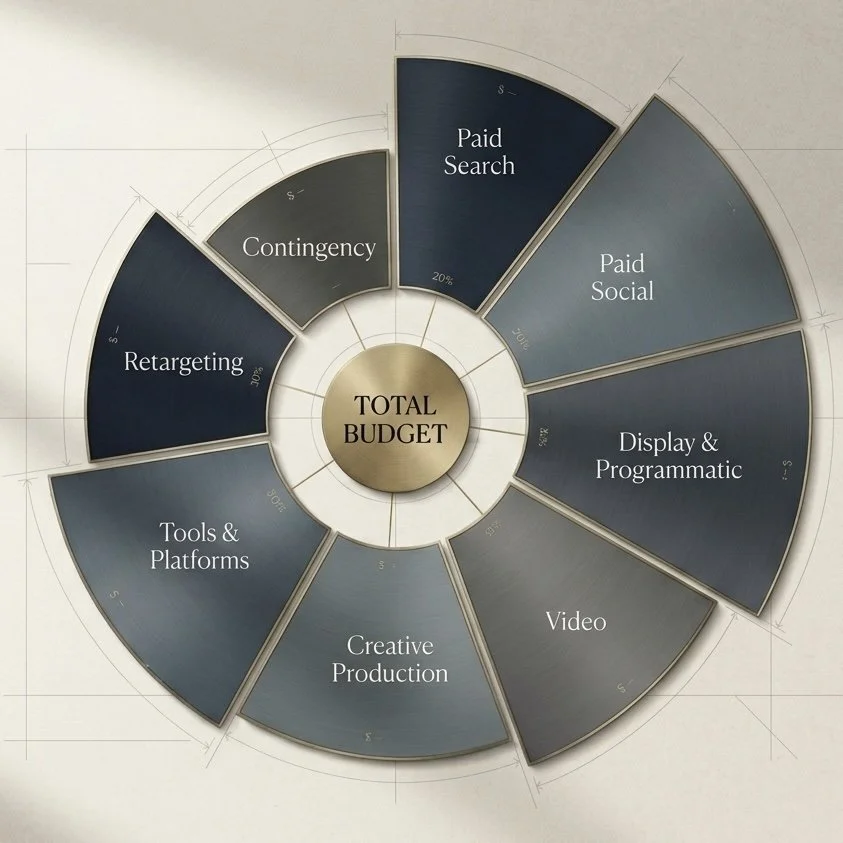
Budget Control Map
Quickly identify where your budget assumptions stop working.
Quickly see where your budget is rigid, flexible, or vulnerable before launch.
For teams actively managing budget - where small decisions have real financial impact.
Most teams don’t revisit their budget assumptions once campaigns launch — that gets expensive fast.
Run the check before your next spend decision.
Use your existing budget plan to quickly see:
where spend becomes inefficient
what’s actually flexible
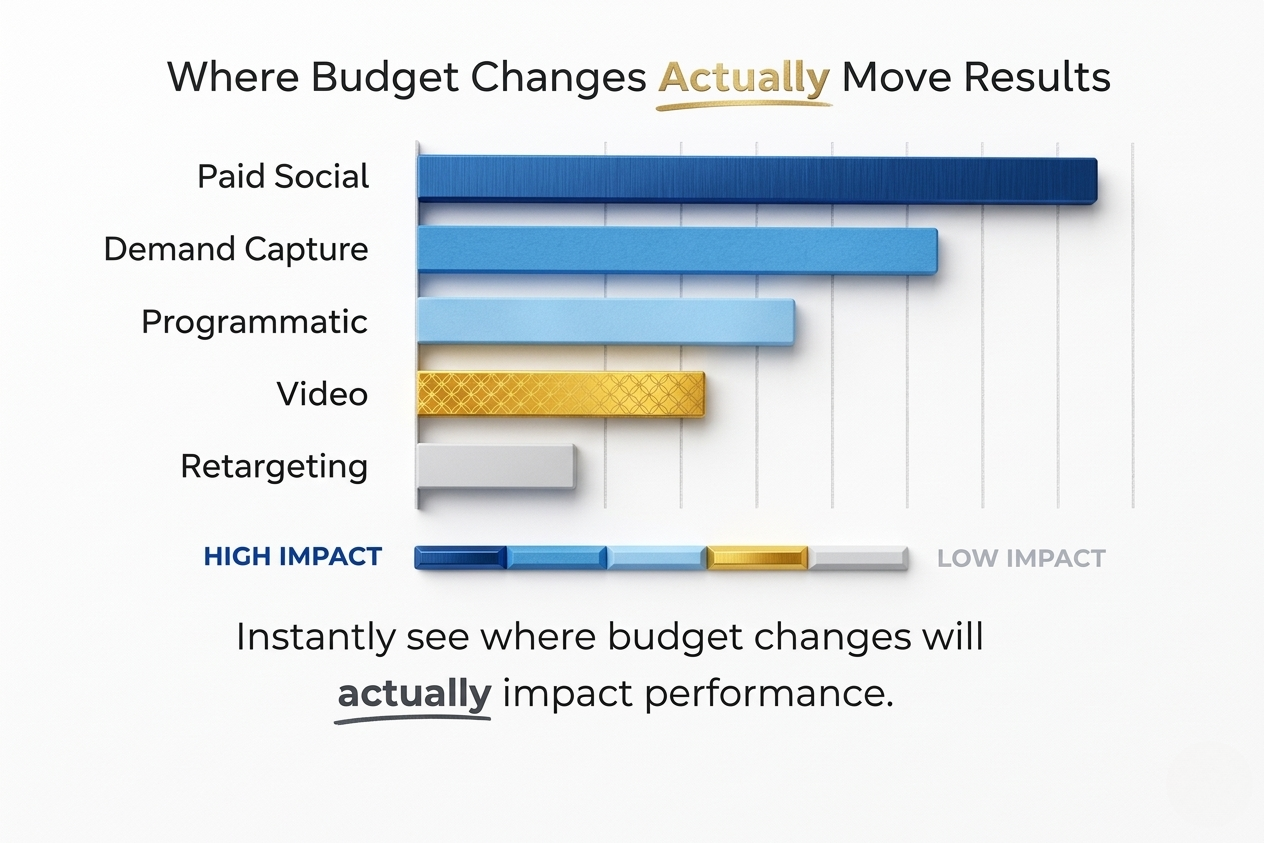
where small budget changes create outsized performance impact
$299 one time purchase
Built to work with your current plan - not from scratch
You don’t need perfect inputs. This is designed to show you where your plan breaks.
Instant access after purchase. Built to quickly show where your current plan becomes unstable.
No setup or account required. Use it every planning cycle.
Enter your email -> secure checkout -> instant download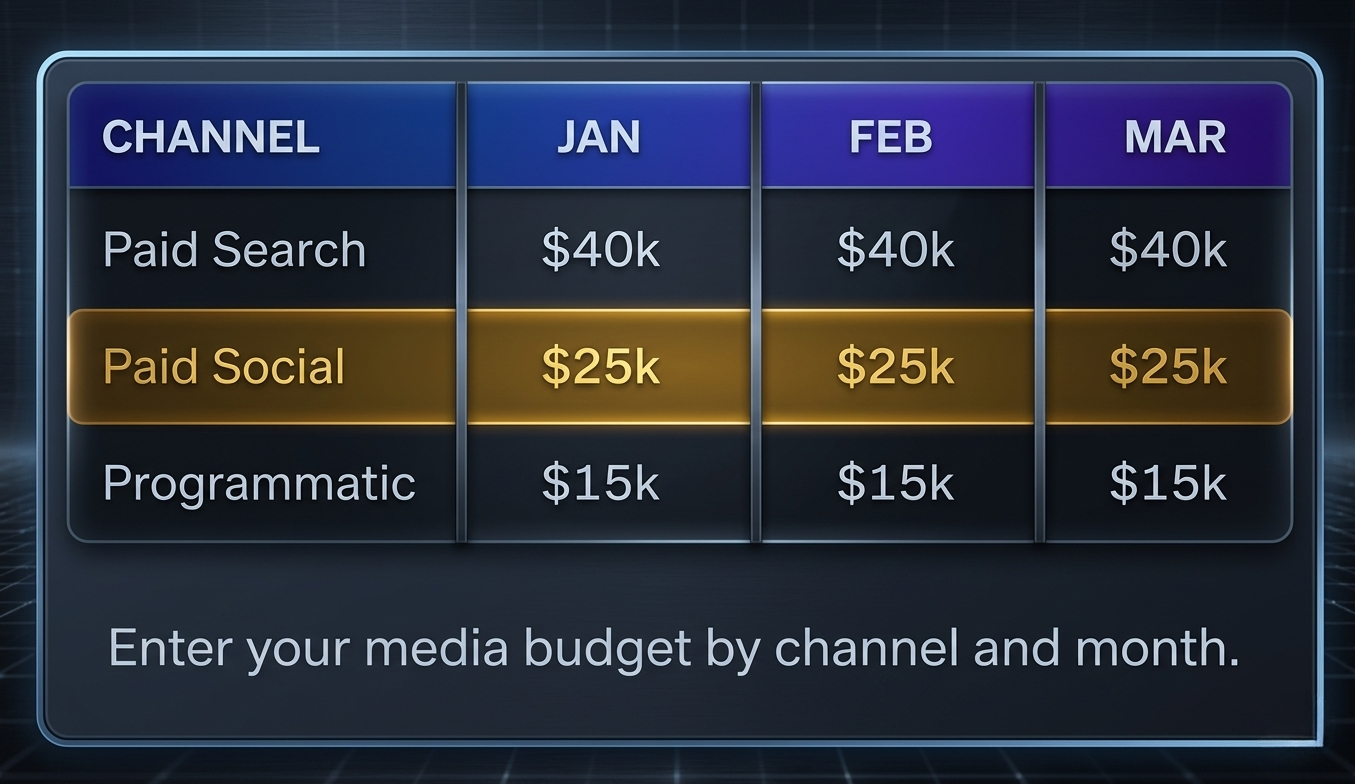
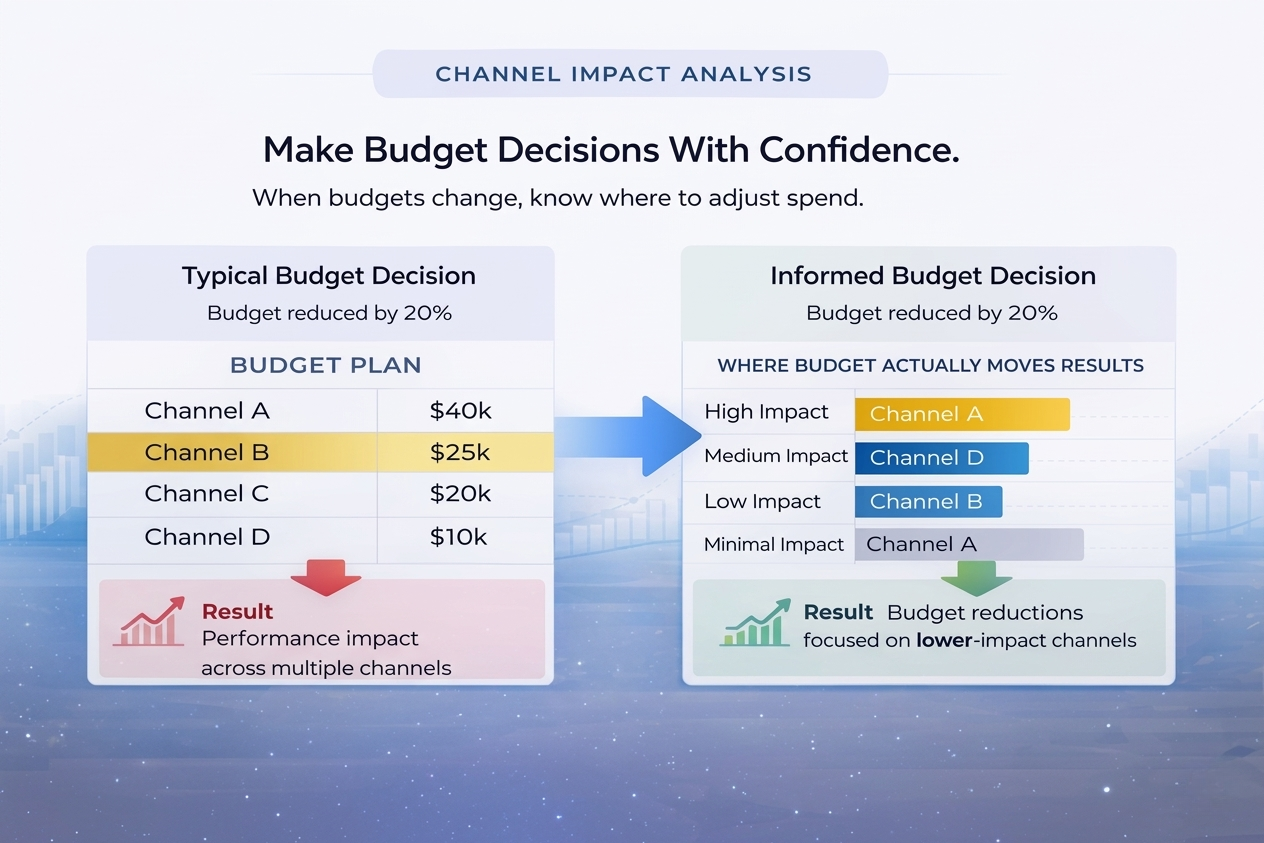
“We saw increased revenue, improved efficiency, and a clear competitive advantage once our strategy and targeting were aligned.
Spending became more focused, performance improved, and our team operated with far more clarity and confidence.”
— Matt D., VP of Marketing, Multi-Location Brand
How Teams Use This Tool in Real Planning Decisions
COMMON PLANNING SCENARIO
Avoiding a $250K Reallocation That Wouldn’t Have Mattered
A $1.8M/year marketing team was reviewing underperforming channels ahead of a quarterly reallocation.
Initial instinct:
→ pull ~$250K from programmatic and video and shift it into paid search.
Before making the change, they mapped their budget using the Budget Control Map.
They found:
~40% of total spend was structurally fixed (contracts, minimums, platform constraints)
Of the remaining flexible budget, only ~$120K could actually influence performance in the current cycle
The channels they planned to cut had low direct impact on conversion volume, but supported upstream demand
Instead of reallocating blindly, they:
redirected ~$90K within high-impact segments
left ~$160K untouched after confirming it wouldn’t meaningfully change outcome
The result wasn’t a performance spike.
It was avoiding a six-figure reallocation that would have had little to no effect.
COMMON PLANNING SCENARIO
Identifying Where Budget Changes Actually Influence Results
A $2.6M/year in-house team was preparing their annual media plan across 7 channels.
Leadership pushed for:
→ “shift more budget into top-performing channels”
The team needed to understand:
which parts of the budget were actually flexible
and where changes would meaningfully affect results
Using the Budget Control Map, they:
categorized spend across fixed, semi-fixed, and flexible buckets
identified that only ~28% of total budget could be reallocated in-year
isolated ~$310K where changes would directly impact performance
Instead of broad reallocation, they:
focused adjustments only on high-impact segments
avoided shifting budget in areas with structural constraints
The outcome was a more precise planning conversation:
Not “where should we move money?”
but:
“Where does moving money actually matter?”
Why This Exists
Most marketing budget problems don’t come from bad execution.
They come from misunderstanding the structure of the budget itself:
what’s fixed
what’s flexible
and where changes can realistically influence results
When those constraints aren’t clear, teams end up reallocating money that can’t actually move outcomes.
The Budget Control Map surfaces those constraints before money is committed. This tool is built from the same planning frameworks used in multi-million-dollar marketing programs by a 7-figure agency.
Most teams don’t have a visibility problem - they have a structural clarity problem.
This is what fixes that before money is committed.
What This Tool Is Not
This tool is not:
a media plan
a forecasting model
a performance or optimization tool
a recommendation engine
It does not:
predict results
evaluate creative, targeting, or messaging
tell you which channels to use or increase
replace marketing, finance, or strategy teams
It’s designed to clarify budget structure and constraint, not execution quality.
What This Tool Does
This tool helps you:
Allocate planned marketing spend intentionally
See fixed vs. discretionary costs at a glance
Identify where budget changes meaningfully affect outcomes
Surface structural constraints early
Prevent misallocation driven by assumptions instead of reality
Reduce reactive reallocation and last-minute panic
It shows you where budget decisions will actually change outcomes - before you commit spend.
Who This Tool Is For
This tool is designed for:
Marketing leaders responsible for budget allocation
Teams under pressure to justify spend or hit aggressive goals
Finance partners reviewing marketing plans
Organizations planning campaigns before results are known
If you need to understand where budget control actually exists, this tool gives you that visibility.
How Delivery Works
You receive instant access to a Google Sheets tool
Make your own editable copy on delivery
All formulas, protections, and logic carry over
Only designated input cells are editable
Designed for transparency, auditability and repeat use.
No software. No setup. No subscriptions.
Make budget decisions with clarity - before you commit spend
One misallocated channel can quietly drain meaningful budget.
This shows you exactly where your plan breaks — before you commit spend.
You’ll get immediate clarity on:
where spend becomes inefficient
what’s actually flexible
where budget changes actually move performance
If you’re managing active budget, this quickly shows where your current plan holds — and where it doesn’t.
Use the budget you already have.
No setup. No subscriptions. No rebuilding from scratch.
Quick clarity before your next budget move.
$299 one-time purchase · Use it every planning cycle.
Instant access. Fully editable. No setup or account required.
Common questions before using the Budget Control Map
-
No. This is a structured planning framework built in Google Sheets. It includes pre-built logic to categorize budget into fixed, semi-variable, and controllable spend—so you can see where changes will actually impact performance.
-
It shows where your budget is truly flexible—and where it isn’t. Most teams reallocate spend based on assumptions. This helps you identify which changes can meaningfully impact outcomes before you make them.
-
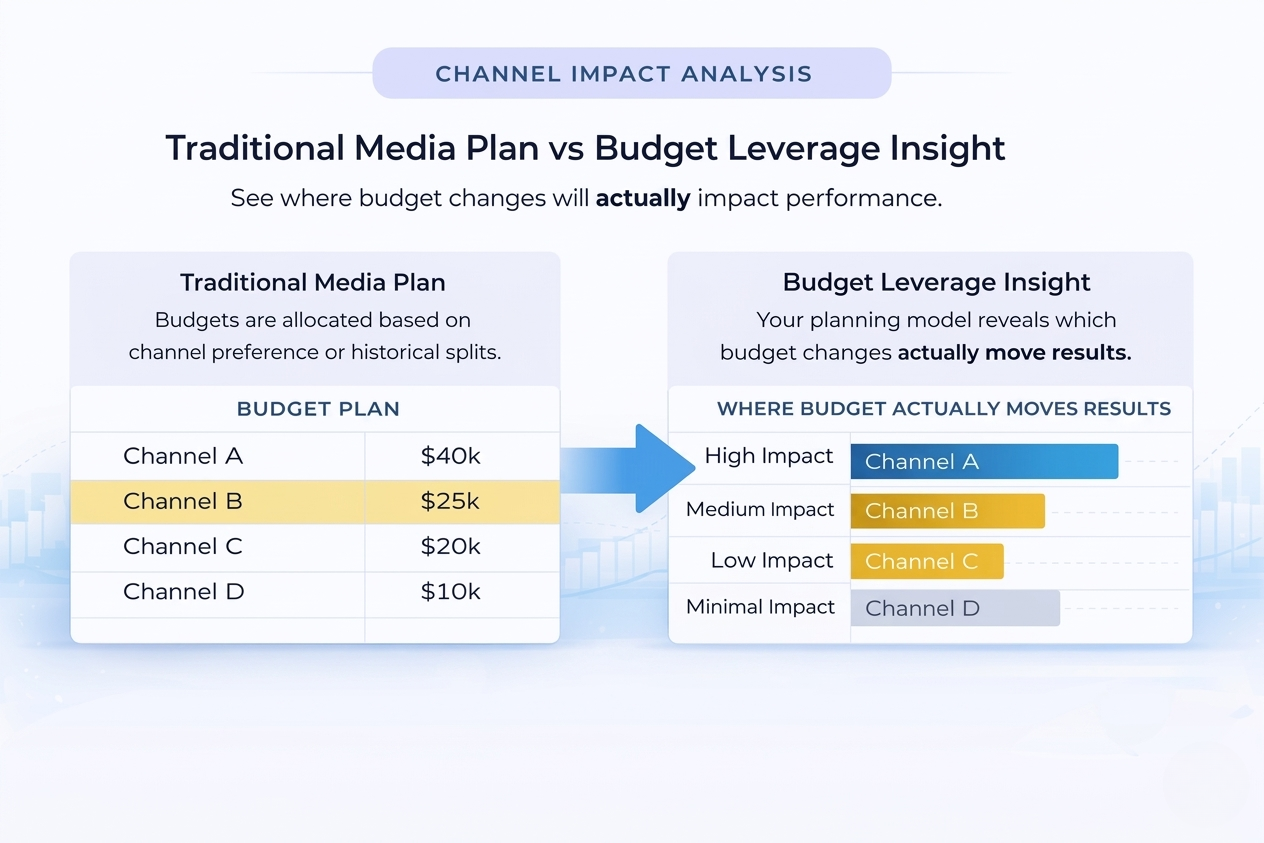
A media plan shows how budget is allocated.
This shows how much control you actually have over that allocation—and where changes will (or won’t) move results.
-
No. This tool focuses on budget structure and decision clarity. It works on its own, or alongside forecasting if you already use it.
-
Most teams can input their budget and start seeing insights within an hour. The structure is already built—you’re simply mapping your plan into it.
-
You’ll get instant access to a Google Sheets model with all formulas and structure included. You can make your own copy, customize it to your plan, and reuse it across planning cycles.
Built from real planning frameworks used in multi-million dollar budgets.
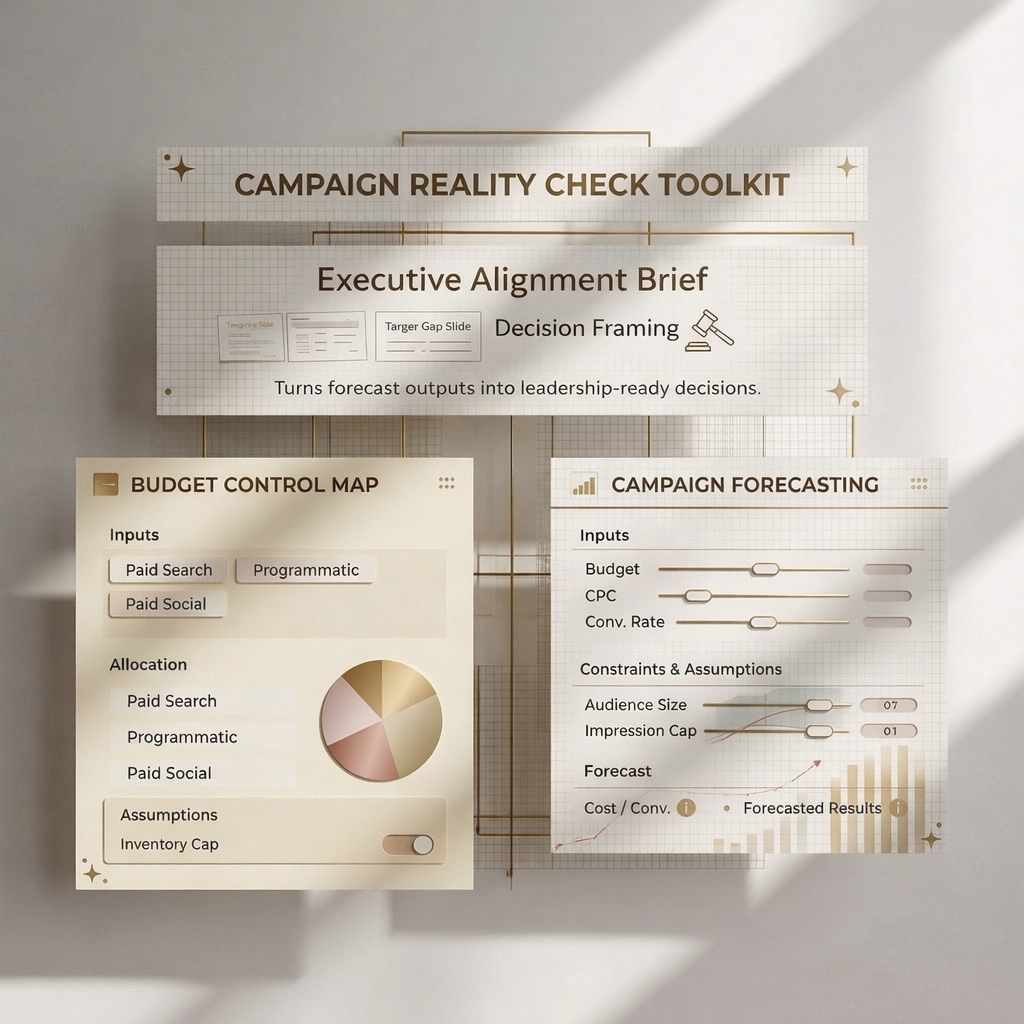
Once your budget structure is clear, the next step is forecasting and decision alignment
The Budget Control Map shows where budget structure creates or limits control.
Budget clarity alone doesn’t guarantee the plan works.
Once your structure is clear, the next questions are:
Are your targets mathematically achievable?
Do your assumptions actually produce those outcomes?
Can leadership align on the right decision before launch?
The Campaign Reality Check Toolkit connects:
structural budget control
mathematical plausibility testing
executive decision framing
into one closed-loop planning system.
Get all three tools together and save $149
(The toolkit is designed to be used together — but each tool stands on its own.)
Why the full system matters:
Budget Control Map shows where changes matter — but not whether they’ll work.
Forecasting shows what outcomes are possible — but not where your budget limits them.
The Alignment Brief turns both into a decision — before execution begins.
Used together, they eliminate the gaps where most planning mistakes happen.